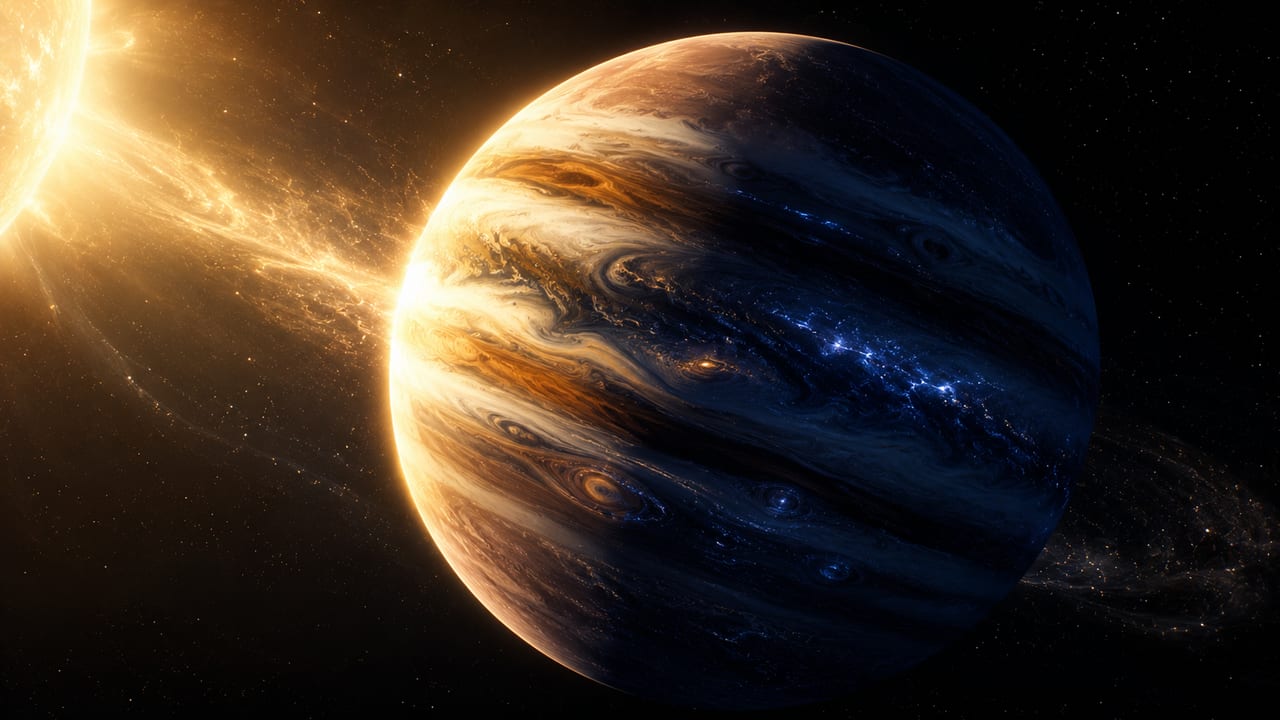
A planet beside a star is like a firefly beside a lighthouse — a billion times fainter, swallowed in the glare. For most of history that ended the discussion. The way around it: a planet tugs on its star as much as the star tugs on it, and a heavy enough planet makes its star wobble by a few metres per second. In October 1995, Michel Mayor and Didier Queloz measured that wobble in a sun-like star fifty light-years away. The world they had found, 51 Pegasi b, was a gas giant whipping around its sun every four days — a configuration nobody had predicted. The count of known worlds has not stopped growing since.
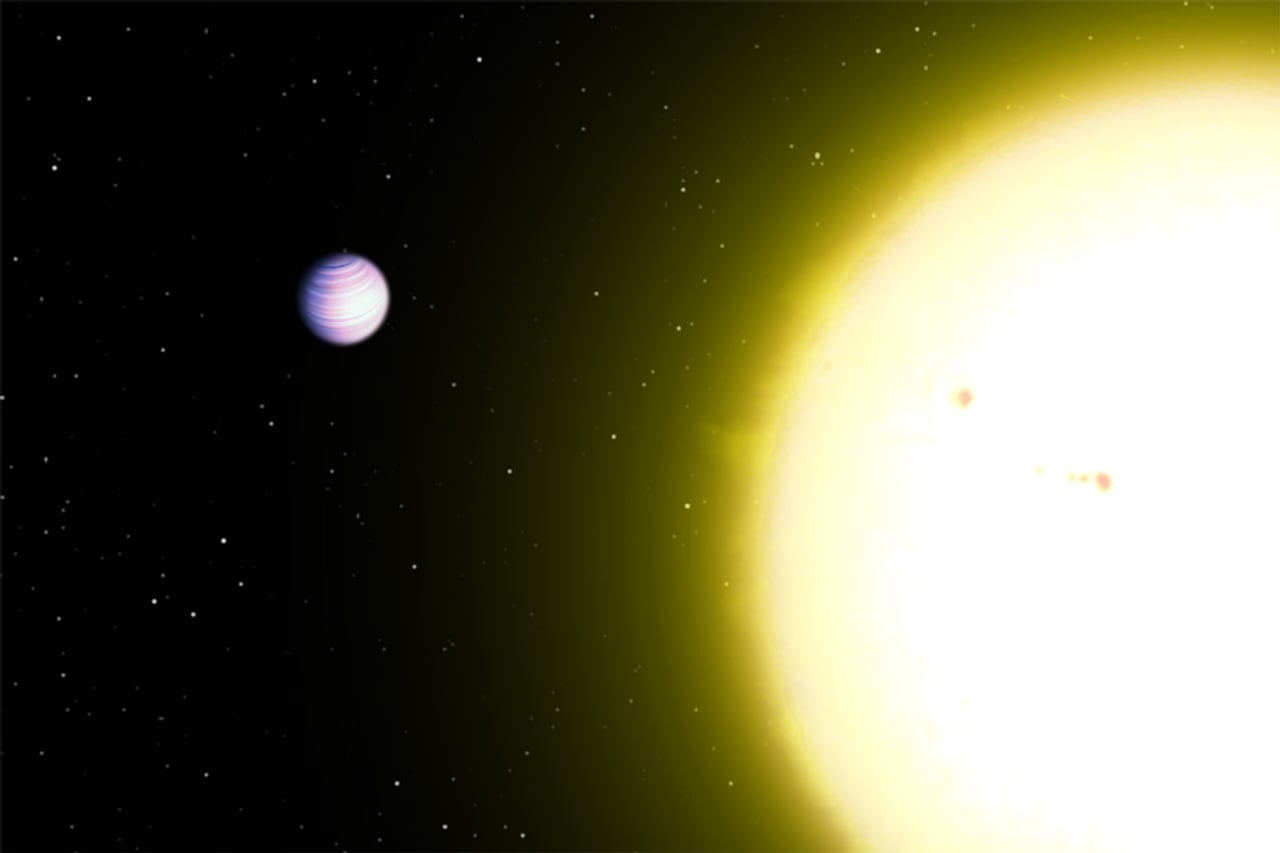
It answered a question philosophers had asked for two thousand years — and answered it with a planet so unlike our own that the textbook story of how solar systems form had to be rewritten.
This is the identical fact set, re-told at a different altitude. Switch any time — the reader keeps your place in the idea, not the prose.