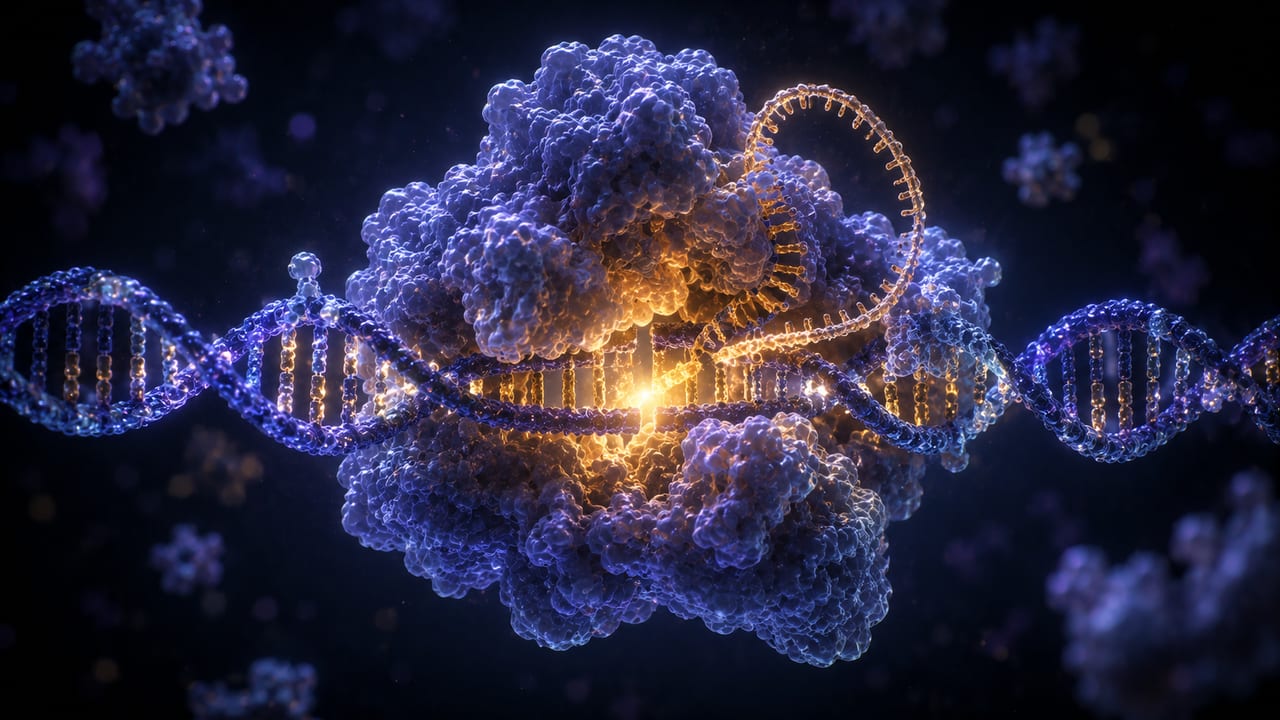
Bacteria defend themselves against viruses with a system called CRISPR: they keep snippets of past invaders’ DNA as a memory, and use a protein — Cas9 — guided by a matching strand of RNA to find that exact sequence and cut it. In 2012 Jennifer Doudna and Emmanuelle Charpentier showed the guide could be rewritten to point Cas9 at any chosen DNA sequence. Suddenly there was a cheap, programmable tool to cut the genome at a precise spot and edit it. Within a decade it had reached the clinic, and in 2023 the first CRISPR therapy was approved.
For the first time, changing a specific gene in a living cell became something an ordinary lab — or eventually a hospital — could do reliably and affordably. It is transforming biology, agriculture and medicine, and forcing hard questions about where editing should stop.
This is the identical fact set, re-told at a different altitude. Switch any time — the reader keeps your place in the idea, not the prose.