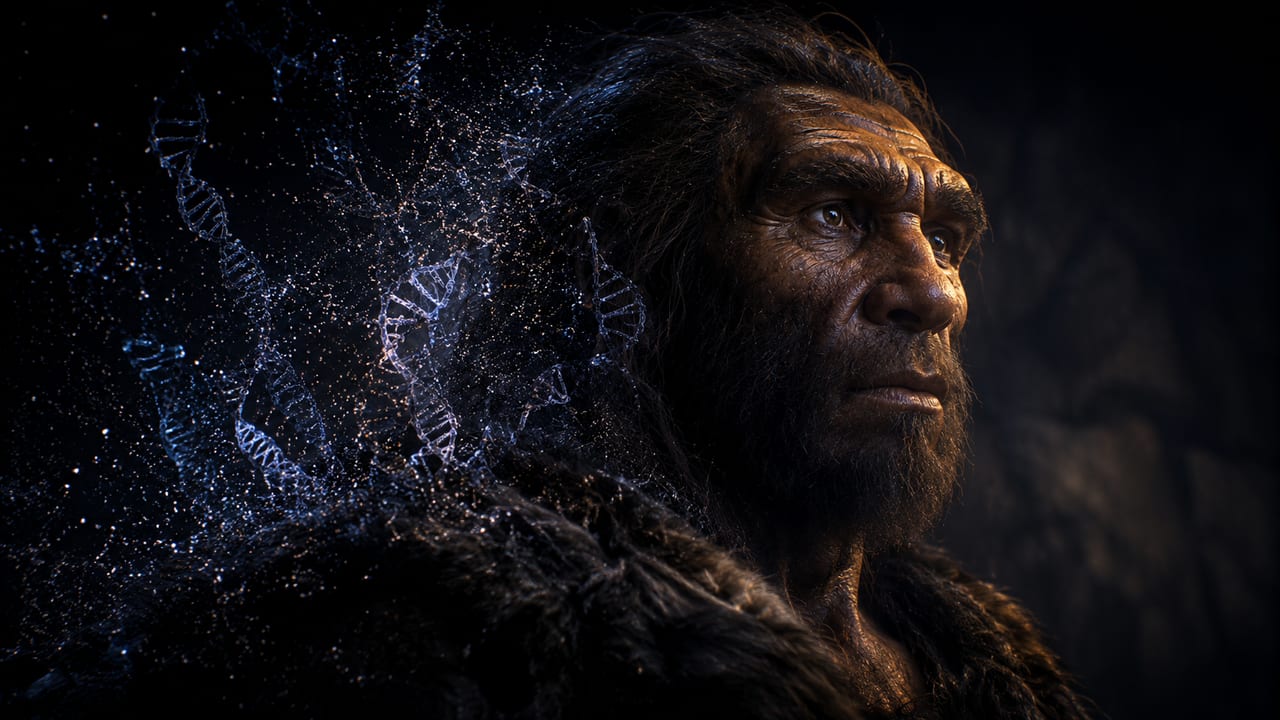
After death, DNA shatters into tiny fragments and is swamped by microbes and the DNA of everyone who has since handled the bone — so for decades, reading the genome of an ancient human looked impossible. Svante Pääbo and his colleagues spent years inventing the clean-room methods and controls to do it reliably. In 2010 they published the genome of a Neanderthal, and found something startling: people outside Africa carry about 1–2% Neanderthal DNA. Our ancestors interbred with them. The same year, a single finger bone yielded the genome of an entirely unknown human group — the Denisovans — identified from DNA alone.
It turned human prehistory from a story told by a handful of bones into one we can read in the genome — and showed that Homo sapiens shared the planet, and children, with other kinds of human. Pääbo received the 2022 Nobel Prize.
This is the identical fact set, re-told at a different altitude. Switch any time — the reader keeps your place in the idea, not the prose.